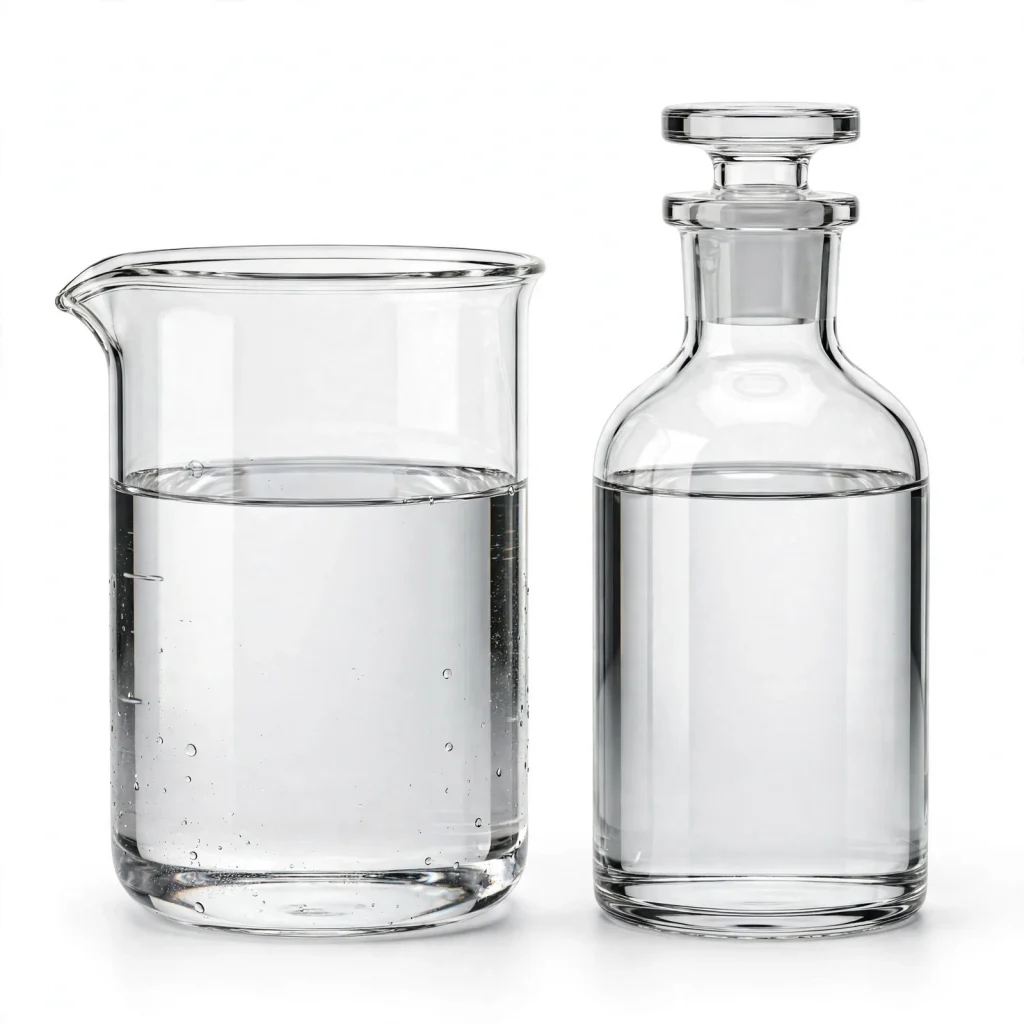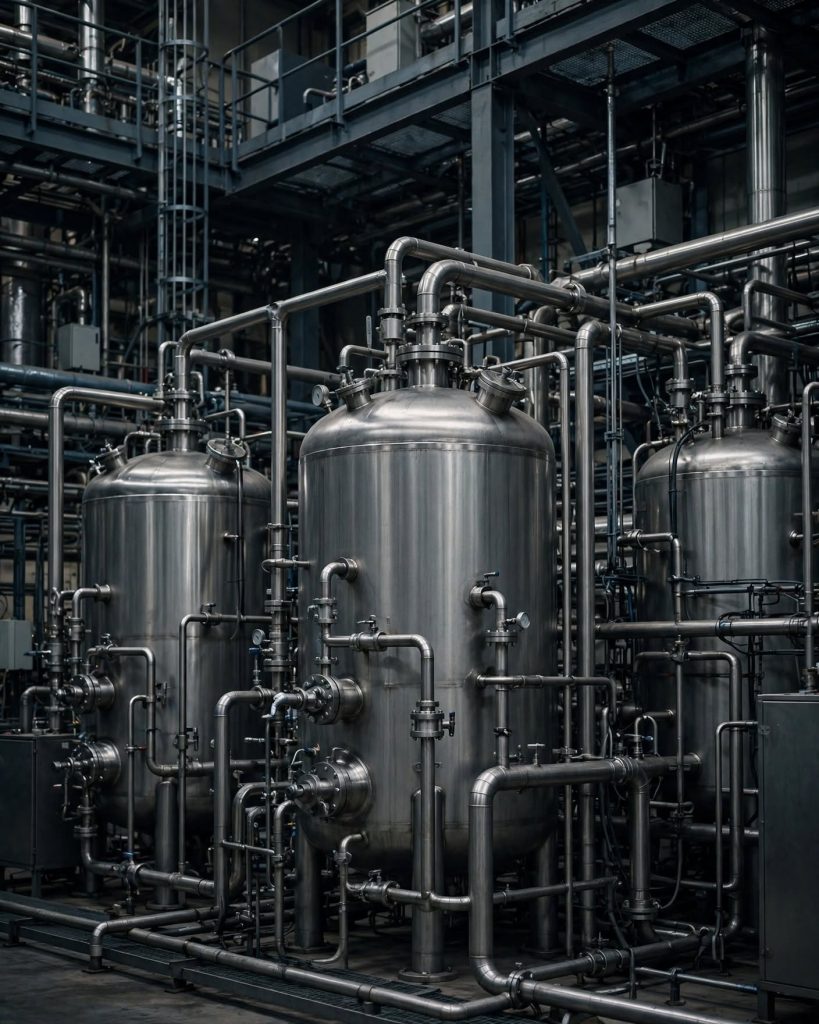


Water systems used in industrial operations often contain dissolved minerals and metal ions that can contribute to scale formation, deposits and process-related challenges.
HEDP (1-Hydroxyethylidene-1,1-Diphosphonic Acid) is an organophosphonate widely used in water-treatment formulations because of its ability to help control scale and bind certain metal ions.
HEDP-based products are used across cooling-water systems, boiler-water treatment, reverse-osmosis systems, industrial cleaning and other applications where mineral-deposit control is important.
What Is HEDP?
HEDP is an organophosphonate with strong metal-ion interaction properties.
It is commonly used in industrial water-treatment formulations to help manage mineral deposits and provide scale-control performance under suitable operating conditions.
Different salts of HEDP can be selected depending on formulation and application requirements.
How Does HEDP Help Control Scale?
Scale can develop when dissolved minerals in water become concentrated and precipitate onto equipment or process surfaces.
HEDP can interact with certain metal ions and interfere with crystal growth, helping reduce the formation and deposition of scale under appropriate treatment conditions.
Its performance depends on factors such as:
- Water chemistry
- Mineral concentration
- pH
- Temperature
- Dosage
- System operating conditions
HEDP Disodium
HEDP Disodium is a sodium salt of HEDP used in industrial formulations where scale inhibition and metal-ion sequestration are required.
It can be incorporated into suitable water-treatment and specialty chemical formulations.
HEDP Tetrasodium
HEDP Tetrasodium is another HEDP-based product used for industrial scale control and metal-ion management.
Its water-compatible salt form makes it suitable for selected aqueous and industrial formulations.
Key Applications
Cooling Water Treatment
Industrial cooling systems can experience mineral deposition as water circulates and becomes concentrated.
HEDP-based treatment programs can help manage scale formation and support cleaner heat-transfer surfaces.
Boiler Water Treatment
Boiler systems require careful control of dissolved minerals and deposits. HEDP can be used as part of suitable treatment formulations designed to manage scale and metal-ion interactions.
Reverse Osmosis Systems
Membrane systems can be affected by mineral scaling. Appropriate antiscalant formulations may use phosphonate chemistry to help manage scale-forming minerals.
Industrial Cleaning
HEDP can be incorporated into selected industrial cleaning formulations where metal-ion control and deposit management are required.
Textile Industry
Water quality and metal-ion control can influence textile processing. HEDP-based products can be used in suitable formulations for process-water management.
Pulp & Paper
Phosphonate-based chemistry can be useful in selected pulp and paper processes where mineral deposits and metal ions need to be controlled.
Factors Affecting HEDP Performance
The effectiveness of any water-treatment chemical depends on the operating environment.
Water Chemistry
The concentration and type of dissolved minerals can influence treatment requirements.
pH
Treatment performance can vary according to the pH of the water system and formulation.
Temperature
Industrial systems operating at elevated temperatures may require careful selection and dosage of treatment chemicals.
Dosage
The appropriate dosage depends on system conditions and should be established according to technical requirements.
System Design
Cooling towers, boilers, RO systems and other water-treatment systems have different operating conditions and chemical requirements.
Why Product Consistency Matters
Water-treatment programs often operate continuously, making consistent chemical quality important.
Variations in product composition can affect formulation and dosing requirements. Reliable sourcing therefore plays an important role in maintaining consistent treatment performance.
“Effective water treatment begins with understanding the chemistry of the system, not simply adding a chemical.”
Final Thoughts
HEDP-based chemistry provides an important tool for managing scale and metal-ion interactions across industrial water-treatment applications.
Choosing between HEDP Disodium, HEDP Tetrasodium and other treatment chemistries should be based on water chemistry, system conditions, formulation requirements and technical specifications.
Need an HEDP Solution for Your Application?
Explore the Kriprix Chemicals HEDP range or contact our team for product and application requirements.